Friday, April 25, 2008

Email-to-blog test

Hi...

This is a test to see how blogging via email works... I am thinking of replacing the live page with this newfangled publishing widget.

This is only a test. Ain't technology wonderful?

-Steve

Wednesday, October 04, 2006

A Little Comment on Serendipity

My active bloggage these days is over on Nomadness, as that's the new boat project; this one is becoming a catch-all for random commentary that might be a bit more enduring than those ephemeral snippets on my live page that, after a few days online, are whisked off to the bit bucket the moment new ones arrive.

A friend was remarking recently about the increasing number of "small world" moments in her life as she pursues ever more interesting projects -- wondering aloud if this is merely random chance or if there are larger forces at work. I had so much fun responding that I thought I'd share the essence of it here:

I've seen this phenomenon in the hard-core geek culture (or "hackers," in the classic sense of folks who get pleasure from circumventing limitations, not in the bad-guy sense of destroying things). There is a relatively small percentage of the population that is out there on the creative asymptote, pushing envelopes and inventing things, and once you start to mingle with any part of it, you quickly make connections across what may seem to be an insanely diverse range of specialties. If you are yourself a specialist, you may never notice the "small world" phenomenon in this context, but if you are working on complex systems like geeky boats... where one high profile project includes embedded microprocessors, advanced ultra-light composites, satellite communication, solar power, navigation, sealed low-friction mechanical linkages, tricky problems involving wheels, and countless other interesting things... then your movement within creative circles and the fallout of friends-of-friends will inevitably trigger a variety of startling full-circle moments. It's not really about probability in the context of billions of people on the planet; it's about the rarefied world of people who are actively being creative instead of toiling away (however competently) at a defined task... or just crank-turning and consuming.

There's another delightful effect, and this is my answer to people who observe, in a sort of breathless New-Age way, that we were meant to meet. I see no reason to believe that there's a "universe" watching out for us and setting up connections, although when you look back at your life in retrospect it often seems a bit too perfect that you met so-and-so at such-and-such a time, without which some major life-defining event would have never occurred. But we should give ourselves more credit. As we wander through the years making choices and dealing with the results, we presumably amass some useful level of wisdom which will help us refine those choices in the future: wasting less time, optimizing return on investment, recognizing love, and maximizing the probability of growth. Every day there are countless little choices... Do I smile back at this stranger? Do I take a moment to write a more thoughtful email than I would normally compose in response to this question? Do I spend a bit more time researching this puzzle to which I haven't yet found a satisfying answer?

Over time, we learn the little behavioral cues -- the signs that someone has skills and insights of value, the "spark" of consciousness in the eyes of a potential friend, the twinkle of humor that reveals a deep shared context without which context-switches would make no sense, the subtle glow between the lines of email that reveals much more than the bare lexical content. If we pay attention to these things, even subconsciously, they pay off thus: we end up spending time with brilliant and wonderful people whom we were meant to meet!

-Steve

Thursday, May 11, 2006

A Flurry of Updates

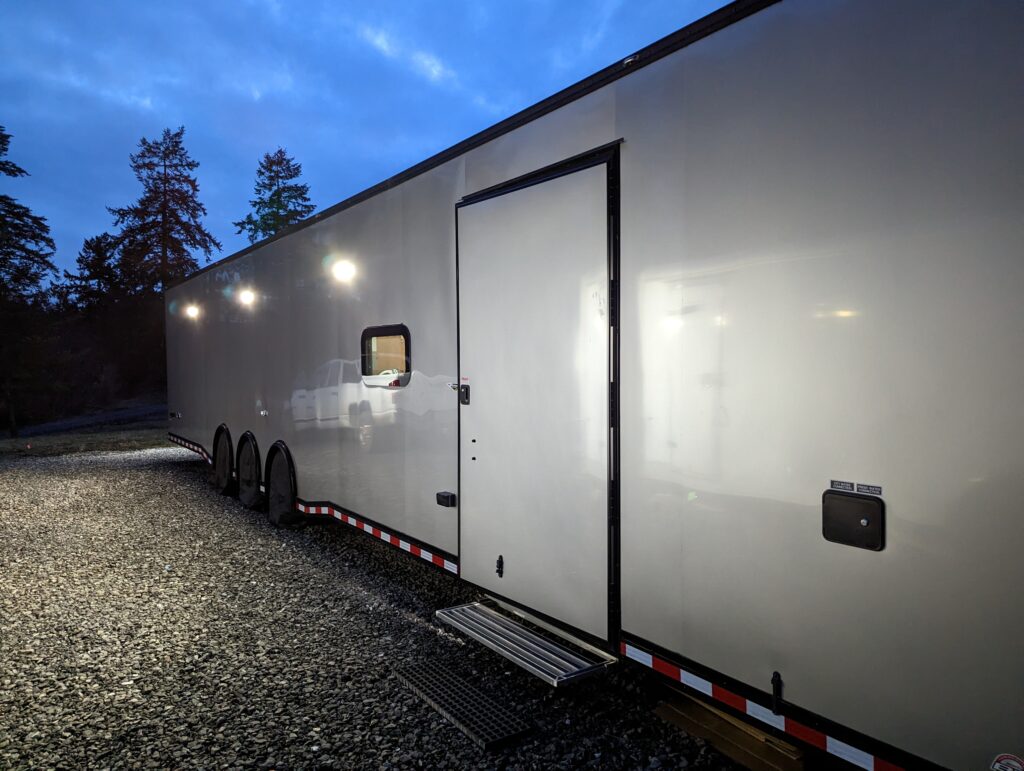
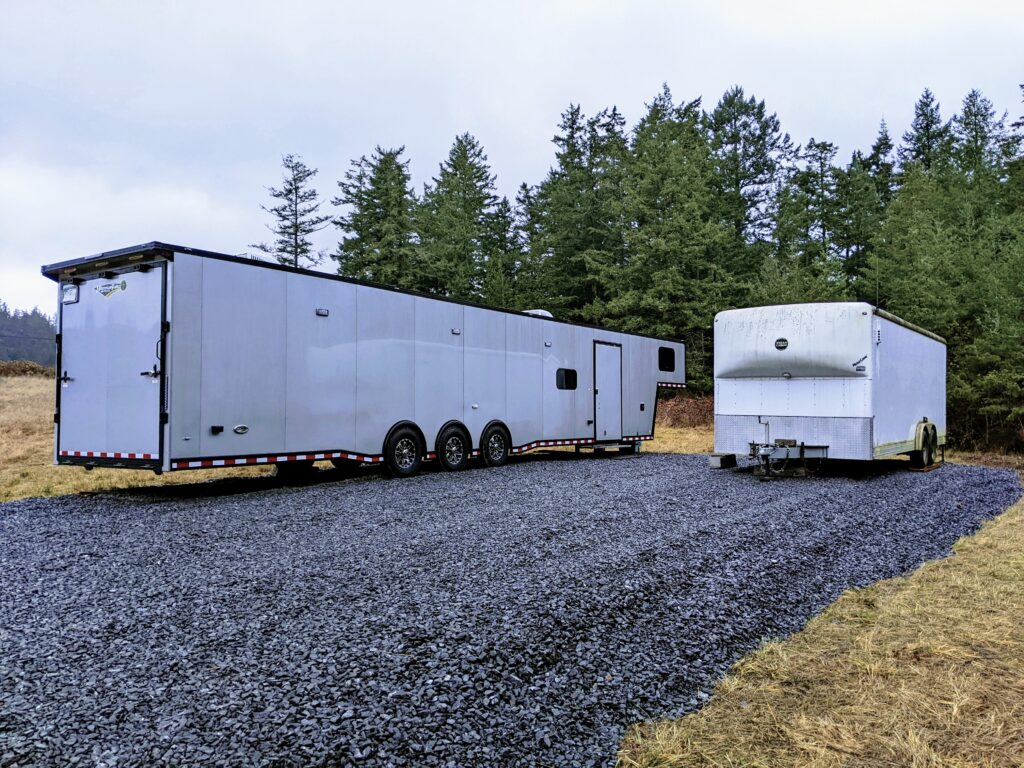
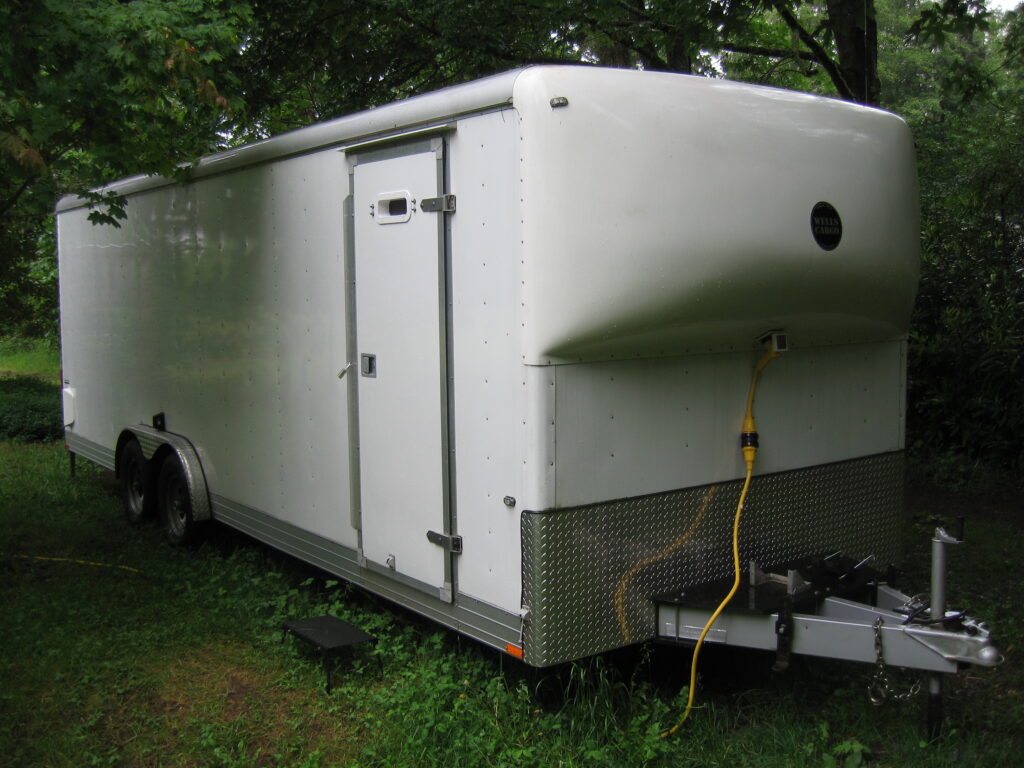
There's quite a bit of news since my last posting, long ago and far away in Kentucky. The old homestead has been shut down, and I hauled a Wells-Cargo trailer full of eBayables back home to Camano Island. (Photos and details of the truck/trailer rig are over here).

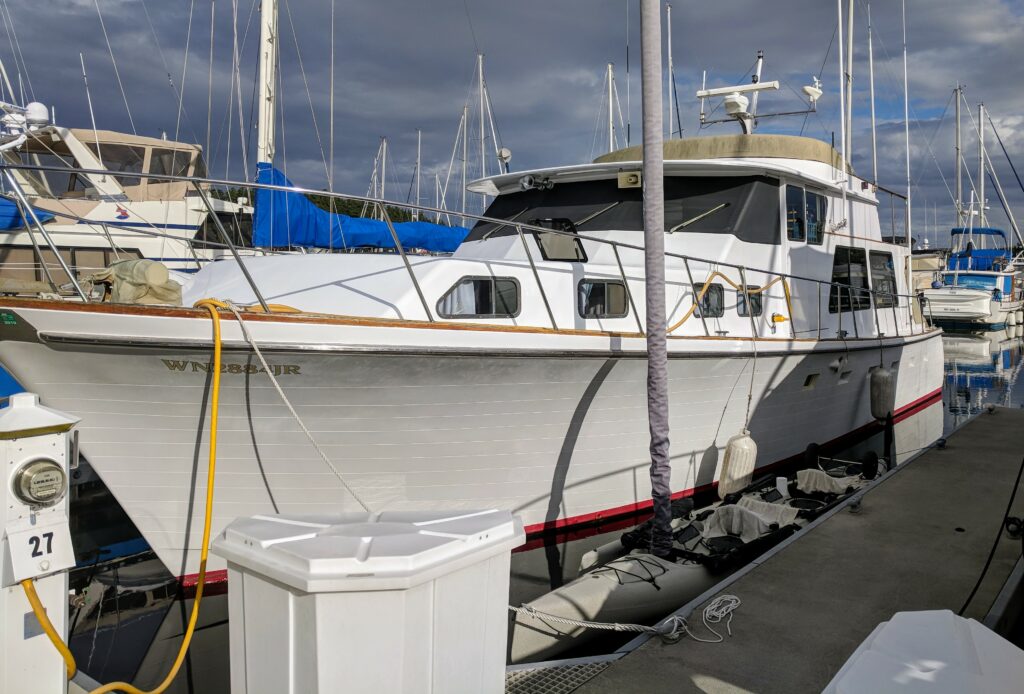
The main thrust at the moment is acquiring and outfitting a ship of live-aboard scale, and the quest has had some bizarre twists... so many that the ship to be named Nomadness now has its own blog. At this writing, that is all about Gypsy Spirit, a 53' steel pilothouse cutter that I now think of as a very close call. The other blog tracks the strange tale, but basically it was an object lesson in how easily one can fall in love with a boat, only to realize with reluctance, after over $3K in surveys and expert opinions, that regardless of a sexy workboat patina it would involve an epic project and a scary amount of money to be truly ready for offshore voyaging. I'm now back on the quest, somewhat poorer, but considerably wiser regarding the wiles of brokers, the seductive allure of a geeky ship, and the hidden dangers of Very Old Steel.

During all this, I haven't been entirely idle here in the Microship/Shacktopus lab. One of the recurring irritants that is doubtless familiar to anyone who hauls around a bag of indispensable gadgets is the sloppy layer of related power supplies and interface widgets that ends up cluttering the space around your computer. I finally got so tired of this (especially after taking a trip with bags of tangled wall-warts and USB docking ports) that I built a docking pack. That link gives the how-to details; here's the end result:


It works beautifully, although it is by no means optimized (switching all chargers together can be thought of as Phantom Loads Writ Large; that will change as soon as a I take the time to make a proper switch-box). Still, it has gone a long way toward decluttering my desk and streamlining a quick departure.

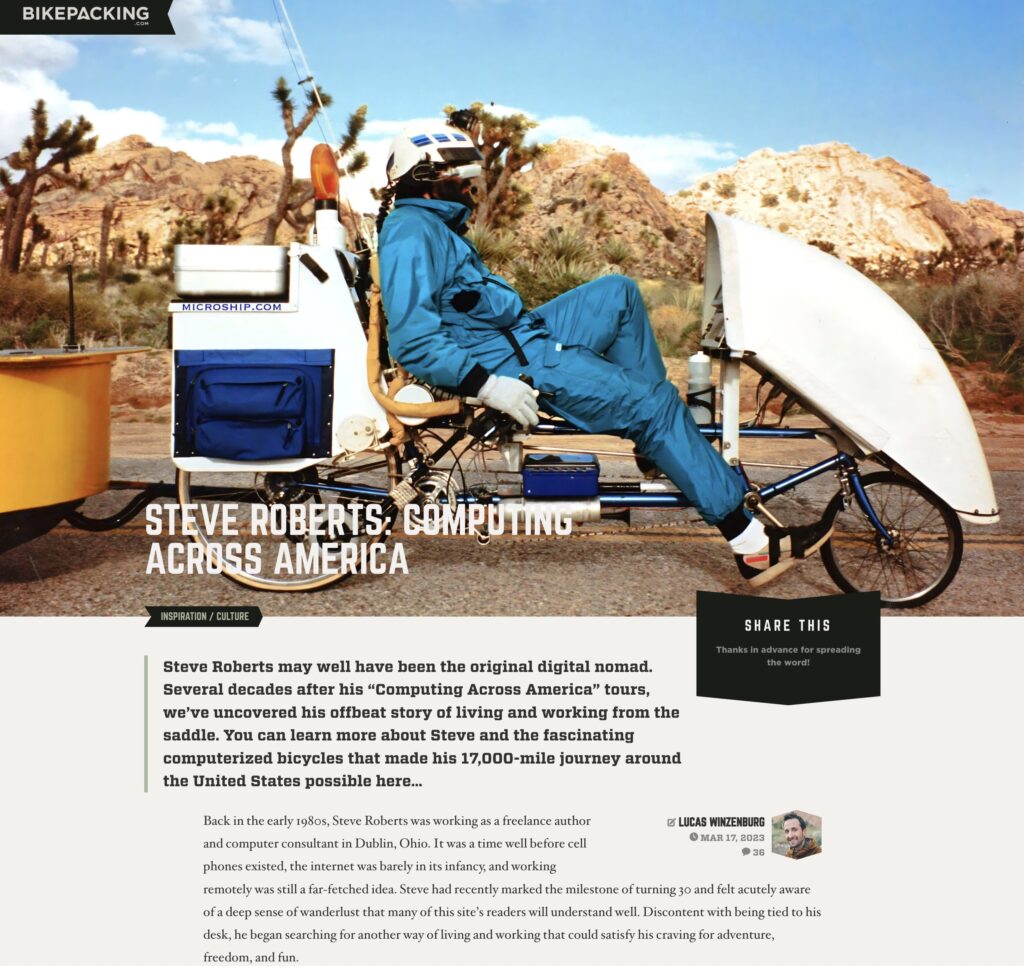
In other news, I've been going through the audio-recording learning curve and tool-acquisition, and am about to podcast (for free) the full text of Computing Across America, chronicling the first 10,000 miles of my adventures as a "high-tech nomad" back in the '80s. This will not only help unshackle the book from its long imprisonment as an obscure and out-of-print dead-tree edition, but also get me comfortable with the audio publishing process without having to go through the painful and self-referential phase of podcasting about podcasting that seems so common these days. ("OK, I am now switching over to the condenser mic, and turning on the compressor VST plug in... this should give us a cleaner sound...").
Speaking of which, I'm using the excellent MXL 990 Condenser Microphone with Shockmountalong with the M-Audio MobilePre USB Mobile Preamp and Audio Interfaceto make the connection to the Mac. I seem to have the best luck recording in Audacity; for some reason it's noisy in Garage Band. I am really enjoying Podcasting Hacksby Jack Herrington, one of the great "Hacks" series from O'Reilly. It's current enough that all the links still work, and is really helping with the initial podcasting learning curve. Should have a first book chapter to announce Real Soon Now.
Finally, I'm ramping up the tonnage-reduction, since dormant possessions around here are like a million tiny anchors that, like that image in Gulliver's Travels, collectively keep me rooted to this spot (not to mention the considerable brain-clutter of knowing where all this stuff is). The latest tool for this is the new Microship General Store on eBay, which seems to be working much better than the old electronic garage sale on this website. Lots of stuff there. Want some?

Cheers!
Steve

Friday, September 23, 2005

Cybertronics and Other Antiquities

I'm trying desperately to get out of this old house in Kentucky and back to the Pacific Northwest, where, in addition to Shacktopus, there's a boat in my immediate future. I'm stuck in a time warp here...

A relic from the past just turned up in family archives: I published this catalog 30 years ago, during the heyday of my fledgling company called Cybertronics (I should have hung onto that trademark and grabbed the domain name when I had the chance!). The origins of my "Wordy" moniker are clear here; one of my customers sent me an 11x17 piece of paper with that monster sentence fully diagrammed, along with the scrawled note: "By God, it actually works!"

<creak> Yes, those were the days. On page 14, you could buy an Intel 8080 for only $50, and 2102 1Kx1 static RAMs were only $2.50 each! Let's see... if I have my math right, that means the 1 Gig of 32-bit RAM in this iMac G5 would cost just under $84 million if implemented in 2102 chips, not including packaging hardware. It would be slower too. And really hot.

Sunday, August 28, 2005

Ode to New Orleans

I have a backlog of material that needs to go here, snippets of things posted on the Microship Live Page during this time I have spent in Kentucky, dealing with the death of my father. An aggregate posting of this 2-month era will appear here soon.

But at the moment, on the eve of the landfall of Katrina, my thoughts are in N'Awlins. It seems fitting to repost something I wrote ages ago, back during the dreamlike Miles with Maggie epoch... I offer it here to help those who only know New Orleans from the current Terror of Nature! coverage on CNN to understand something of the magic of this city, unlike any other in the United States.


Born Toulouse
New Orleans, Louisiana
Steven K. Roberts - July 14, 1988

There’s a sort of melancholy about this city, you know, a strange melancholy that excites the lusts and touches the soul... and every descent from our balconied French Quarter suite into street-level turmoil makes the keyboard fingers itch. Stories lurk in the dark eyes that glower from shadows, in the antics of children marked by street life, in the crenelated faces of those who were here to watch the first electric streetlights sharpen their familiar shadows. This is a rare thing in post-video America: a city’s identity proclaimed by every street, every guitar lick, every face, every shot of Jagermeister swilled before breakfast in Molly’s Irish Pub.

And in the deep sultry night the rhythms of cultures mingle. Stand at Toulouse and Bourbon and let them shake you - a thrumming confusion of blues, rock, jazz, Dixie, and a passing nuclear-powered automotive rap machine with enough oomph to perform CPR on the driver. Swirling through the violent acoustic crossfire is a motley fluid of drunken humanity, and if my metaphors seem mixed... it’s no accident. So is the reality.

People! Blacks from the projects, street-wise and native, white eyes darting between the blues man’s golden sax and the tan legs that lure imaginations past the hem of a passing red miniskirt. Tourists of all flavors, ambling with too-deliberate ease along a path that avoids the ruffians - eyes alert to the approach of hustlers, drunks, or the titillating shopfronts of commercial naughtiness. Sixties carryovers, ponytailed, attitudes revealed less by hard-rock style than by a sort of Rockwell hardness index of the eyes. Hawkers, luring people into doorways to glimpse nude women writhing on smoky stages. Cops, jaded and confident, frisking passers-by with a glance and arresting the city’s descent into behavioral entropy by their very presence. The rich, too well dressed, slumming. The bottom out-of-sight poor, eyes pleading, slumped against dirty walls in visible dejection. Con artists, accosting the naive. Musicians, easy in their element but disturbingly ordinary-looking off stage, commuting the side streets with battered instrument cases. Mimes, eloquent and graceful, filling cash boxes with the wordless poetry of dance. Hookers swaying practiced hips under the lacy incongruities of Frederick’s. Librarians on furlough from the conference, walking in close wide-eyed groups in this place far from Kansas. Ordinaries, who could be up to the most heinous of evils and never show it. Gays, simpering down the street with hands on each other’s bottoms. Cabbies lending a touch of hard-edged New York raucousness with ready honks and impatient driving styles. Whooping college students, hell-bent on having a good time, clutching their paper-cupped Hurricanes while getting down in coarse parody of the bloods who lend authenticity to what might otherwise degenerate into a Daytona Beach. Old coots, young nimble black break-dancers, lost drunk white high-school kids, businessmen recovering from business, toughs on missions of darkness and terror, brain-damaged druggies slurring curses, and the gaudy human echoes of Mardi Gras. And above all, such a variety of bodies and faces that no stroll through the maelstrom can fail to yield arousal, disgust, longing, fear, awe, nostalgia, and laughter (sometimes... all by the same person.)

* * *

Jackson Square. Jax Brewery. Cafe du Monde. The shops and museums of Royal Street. The city by day is awash in tourism, an economy based on T-shirts, biegnets, ceramic masks, artwork, and endless variations on the almighty souvenir. For 75 cents, you can knock back an oyster shooter - a raw gob of glistening gray flesh swimming in a dollop of Bloody Mary mix. At Mr. B’s Bistro, the bartender muddles an Old Fashioned while keeping up a running commentary on local food, music, and shops. At Molly’s breakfast, fogged penitent eyes and tortured foreheads mark the hung-over. It’s all here: portrait artists competing for sittings, joggers in the park, calliope toots under rising columns of riverboat smoke, sunsets over the cathedral, fleshy old women in ghastly pastels clutching beaded handbags, a pricey gallery of Lennon and Erte, bored horses with flowered hardhats standing before idle buggies, coarse propositions muttered to any female on the street, a cappella falsetto soul scatting, mingled languages, heart-pounding glimpses of flesh and ecstasy, ripoffs, good deals, brutal humidity, and interludes of iced cappuccino to cool the sweat.

And what delights me most in all this is that it knows itself, celebrates itself, procreates itself like a giant mutant amoeba. New Orleans is its own species, not a homogenized amalgam of malls, billboards, and suburban conformity; this city rejects the ordinary by seducing it, assimilating it, and changing it forever.

* * *

It’s hard to leave this place. I write now at a worn table in Molly’s, dark walls around me plastered with yellowed business cards dating back to the 60’s. The clientele is varied: hungover Smiley asleep against the pay phone, a woman in too-tight leather, a street-scarred longhaired Asian, a scattering of tattooed regulars. Another perfect omelette just met its match, and I alternate between coffee, water, and Jagermeister while trying to capture something of this town. And oddly, I find I don’t want to go.

Cities usually chase me away with noise and danger. This place has both in abundance, but I think there’s no hurry... and I certainly don’t miss the hot smelly bus and its load of clutter. I know this little place down on Decatur where the jambalaya can make you crazy...

Monday, June 27, 2005

Shacktopus Debut

Well, the first waypoint has been reached... a public showing of the Shacktopus system. It was certainly not finished (no RigNexus and no cabling), but the gross packaging was completed in time for the Sea-Pac amateur radio convention in Seaside, Oregon.

That's Budd, W3FF, of Buddipole fame examining the box; Jeannie and I are working the booth. She's now a ham, by the way, and had a ball with her first glimpse of the radio-geek culture... preparing her somewhat for Field Day, a week later, when she discovered the double-X advantage of having a YL voice during a contest on HF.

Anyway, the Sea-pac show was very useful, even though we have nothing to sell just yet. Seeing peoples' reactions and listening to their questions helped refine the message; I had been so immersed in the design that I had not yet polished anything even approaching the requisite "30,000-foot view" or "elevator pitch" that summarizes a project in a manageable number of words.

Field day was fun, although we didn't really take advantage of any of the Shacktopus functionality beyond the radio, antenna-related hardware, and external solar/battery power. We participated with the K7IP group in Skagit county, and I made 16 contacts on 5 watts (well, OK, 15 of them were helped a bit by a tri-bander beam on a tower). But still, the cost-per-QSO on the FT-817 is now down to $40 or so. Can't wait to actually play with this instead of looking at it as a complex engineering project.

Here's what the box looks like at the moment. The big green block in the middle is actually made out of Divinycell foam... for the convention, I needed something to fill the big empty space and show what's coming up. The board that we are designing to live in that spot is the RigNexus, based on an Atmel ATmega128 CPU. It runs the audio mixing matrix, a big SPI chain that handles lots of I/O, communication with the SMBUS battery charging system, analog data collection with on-board flash storage, a universal active filter, bluetooth to the PDA, DTMF decoder for remote control via UHF, a speech synthesizer, audio recorder, local UI with an LCD, and general housekeeping... including powering up the Linux board when the system needs to become net-enabled. More on all this both here and on the Shacktopus site as it develops; I'm diving into a huge learning curve that includes Eagle CAD, the Atmel architecture, and active-object state-machine architecture.

Cheers and 73,
Steve N4RVE

Friday, May 27, 2005

Shacktopus Taking Shape

This is an intense time... driven by my old nemesis, the trade-show deadline. Actually, it's just a hamfest, but the pressure is every bit as intense as a COMDEX of the Olden Days: this is my first public appearance in years. I certainly don't expect to be done, of course, but the looming mid-June date is effectively keeping me from sinking into the sloth that characterized much of the past 3 or 4 years.

But it's not just that. Today I had a bit of an epiphany, discovering (thanks to Ned Konz) the joys of AVRStudio, a JTAG interface, and an ATmega128 development board. Damn, this stuff is cool! My last embedded environment was a serial port on a FORTH board, and while I love FORTH, it certainly didn't offer the intimacy with running code that we find in modern (and almost free) tools. And, of course, there is some serious horsepower in little $10 chips these days... along with all the things that can be hung on their ports with hardly any interface circuitry.

The architecture of Shacktopus has evolved considerably. The always-on processor is the ATmega128 (in the form of an Olimex AVR-MT-128), aided considerably by a collection of wondrous Maxim SPI devices: programmable attenuators for the matrix mixer, UARTs to generate a half-dozen extra serial ports, and I/O expanders to handle the largish collection of status and control bits (as well as a programmable active filter network to give me software-controlled high-pass, low-pass, band-bass, or notch). State machines manage a UI that spans a local LCD/keypad, remote access via DTMF tones and synthesized speech, and a remote telnet interface that arrives via the Linux board...

And that's the other system, the "Big Iron" in my backpack: a Technologic TS-7200 embedded ARM Linux system running at 200 MHz. This uses hamlib to deal with rig interface (initially the Yaesu FT-817), and also provides the full range of services one expects from a robust OS: Internet access, LAN presence, data logging, and an on-board web server that can be reached via Bluetooth or Wi-Fi from the Tapwave Zodiac that rides on my belt. That lovely PDA, and the Yaesu VX-6R that talks to the embedded VX-2R, comprises the wireless human-interface... no laptop necessary.

Connected to all this are quite a variety of interesting devices... as much as I can fit into the 12x16x3 inch polycarbonate enclosure:

shacky-hinges

More on all this in a future posting, or a proper web page for this thing that needs to be done Real Soon Now.

After the Sea-Pac show (and Field Day the next weekend), my plan is to put this new human-scale technomadic system to the test with two solo adventures: an Amtrak jaunt across the US, and a kayak jaunt of a week or so in local waters. At the same time, we'll be marketing the key components: the RigNexus board that runs all the I/O, the Li-Ion power system with SMBUS interface, and a few turn-key packaged versions for different applications. If you are interested in being an "early adopter," please let me know.